
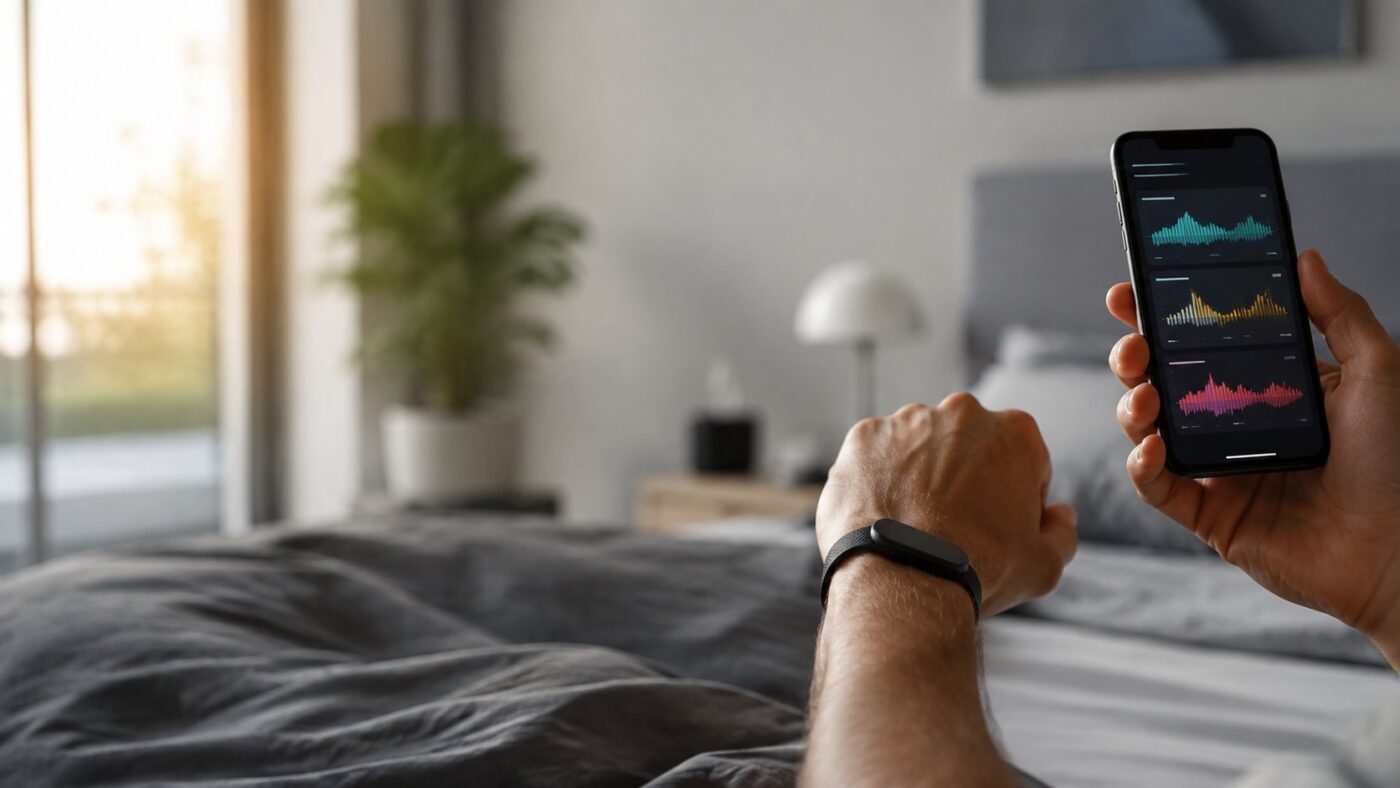
WHOOP scores explained: Recovery is WHOOP’s estimate of readiness relative to your personal baseline, Strain reflects accumulated cardiovascular and muscular exertion, and Sleep Performance compares the sleep you obtained with the sleep WHOOP estimates you needed. These scores can help you notice patterns, but a single reading cannot diagnose illness, prove that you have recovered or replace professional medical advice.
After wearing WHOOP continuously for 30 days, the most useful lesson was not to chase a perfect number. It was to compare trends with context: sleep, exercise, work demands, alcohol, illness and how the body actually felt. If persistent fatigue, poor sleep or other symptoms are affecting you, a private GP consultation in London can put wearable data into a broader clinical picture.
Watch: a doctor’s 30-day WHOOP experience
This article discusses one person’s 30-day experience and the research available on consumer wearables. It is not a product endorsement or a substitute for medical assessment.
WHOOP scores explained at a glance
WHOOP is a consumer wellness wearable that uses optical heart-rate sensing and motion data to generate proprietary scores. Its main daily outputs are Strain, Recovery and Sleep. They are related, but each answers a different question:
- Strain: how much cardiovascular and muscular exertion the system estimates you accumulated.
- Recovery: how prepared the system estimates you are for strain, based on overnight measurements and your personal baseline.
- Sleep Performance: how the sleep recorded compares with the sleep need estimated by WHOOP.
The scores simplify complex physiology. That makes them convenient, but it also means they should be treated as prompts for reflection—not objective verdicts on health or performance.
WHOOP Strain score explained
WHOOP describes Strain as a proprietary measure of cardiovascular and muscular load. The scale is logarithmic, so moving from an already high score to an even higher one represents more work than the same numerical increase lower down the scale. Day Strain accumulates across exercise and daily activity.
Strain is not a direct measurement of psychological stress or cortisol. A demanding day, poor sleep or illness may influence heart rate and therefore affect the score, but the device does not tell you why a value changed. Use the number alongside the type of training completed, perceived effort, symptoms and the wider circumstances of the day.
WHOOP Recovery score explained
Recovery is WHOOP’s proprietary estimate of readiness. According to WHOOP, the calculation draws on overnight metrics such as heart rate variability (HRV), resting heart rate, respiratory rate and sleep, interpreted against an individual baseline. Some available metrics can vary by device, membership and region.
The green, yellow and red zones are easy to understand, but they are not medical diagnoses. A green score does not guarantee that hard training is safe, and a red score does not prove that something is medically wrong. Pain, fever, chest symptoms, unusual breathlessness, dizziness and significant fatigue matter regardless of the colour shown in an app.
How should you interpret HRV?
Heart rate variability is the variation in time between successive heartbeats. It reflects several influences on the autonomic nervous system and can change with training, sleep, alcohol, illness, psychological load and many other factors.
More HRV is not universally “better”. Values differ substantially between people, so comparison with your own pattern under similar conditions is usually more meaningful than comparison with someone else. Slow breathing can alter HRV acutely, but a short-term change does not prove that overall recovery has improved.
WHOOP Sleep score explained
WHOOP’s sleep tools estimate when you were asleep, total sleep time and time in light, deep and rapid eye movement (REM) sleep. Sleep Performance then compares recorded sleep with WHOOP’s estimated sleep need.
Both non-REM and REM sleep have important functions; REM is not the only “restorative” stage. A wrist wearable does not measure the brain, eye and muscle signals used in laboratory polysomnography. Instead, it infers stages from signals such as movement and heart rate.
Published validation studies suggest that consumer wearables can be useful for estimating sleep timing and duration in healthy adults, while classification of specific sleep stages is less dependable. In practice, trends in sleep duration and consistency are generally more useful than reacting to one night’s estimated REM or deep-sleep value.
What the 30-day test revealed
This was one person’s anecdotal self-observation, not a clinical study. It cannot establish that changing training because of a score caused any improvement. Even so, four practical observations emerged:
- Early readings were provisional. WHOOP personalises some outputs as it accumulates recovery data, so the first days were better treated as a calibration period than a fixed baseline.
- Context made the numbers more useful. A lower score meant more when considered with sleep, recent exercise, work demands and how the wearer felt.
- Flexible training felt more sensible than a rigid schedule. On some lower-recovery days, the wearer chose a lighter session. This was a personal decision, not evidence that everyone should train according to WHOOP.
- Patterns mattered more than instant results. Sleep, exertion and perceived recovery did not always move together on the same day. Looking across several days reduced the temptation to overinterpret one score.
How to use WHOOP scores without letting them run your day
- Look for repeated patterns. Compare several days or weeks rather than reacting to an isolated value.
- Keep the conditions consistent. Wear the device as directed and note changes in routine, illness, travel, alcohol or training.
- Use subjective information too. Record energy, mood, soreness, symptoms and perceived exertion.
- Do not train through warning signs because an app is green. Symptoms and professional advice take priority.
- Do not self-diagnose from a red score. Check the sensor fit and circumstances, then seek clinical advice if symptoms persist or concern you.
Frequently asked questions
Is WHOOP a medical device?
WHOOP’s terms state that, except for specified Heart Screener features that are not available everywhere, its services and device are not medical devices and are not intended to diagnose or treat health conditions. The everyday Recovery, Strain and Sleep scores discussed here are wellness and fitness information.
What is a good WHOOP Recovery score?
WHOOP displays higher scores as green, moderate scores as yellow and lower scores as red. The more important comparison is with your own established pattern. A score should not overrule symptoms, medical advice or sensible training progression.
Does a higher HRV always mean better recovery?
No. HRV varies by individual and context, and an unusually high or low value can have several explanations. Review the trend relative to your baseline rather than pursuing the highest possible number.
Can WHOOP diagnose a sleep disorder?
No. Consumer-wearable sleep estimates are not a diagnosis. Speak to a clinician if you have persistent insomnia, disruptive snoring, witnessed pauses in breathing, excessive daytime sleepiness or another ongoing concern.
How long does WHOOP take to calibrate?
The timetable varies by metric. WHOOP’s current calibration guide lists different minimum numbers of recoveries for different features. Treat early values as provisional and check the app’s current guidance for your device and membership.
References and further reading
- WHOOP: Strain
- WHOOP: Recovery
- WHOOP: Sleep
- WHOOP: Calibration timeline
- WHOOP: Terms of use and medical limitations
- Miller et al.: WHOOP sleep validation against polysomnography
- Miller et al.: validation of six wearables for sleep, heart rate and HRV
Want help interpreting wearable data in context?
A wearable can start a useful conversation, but it cannot take a medical history, examine you or investigate persistent symptoms. If you would like an individual assessment, book an appointment with Zen Healthcare. Seek urgent medical help for severe or sudden symptoms.

 Cryotherapy