Blocking folate receptor antibodies
These antibodies may interfere with folate binding to the receptor and, as a result, affect how much folate the body transports.

The Folate Receptor Autoantibody Test (FRAT) is a specialist blood test designed to detect autoantibodies that may interfere with the body’s ability to transport folate, or vitamin B9, effectively. In other words, it examines a mechanism that routine folate testing simply does not cover. ZEN Healthcare London offers private FRAT testing across four clinic locations.

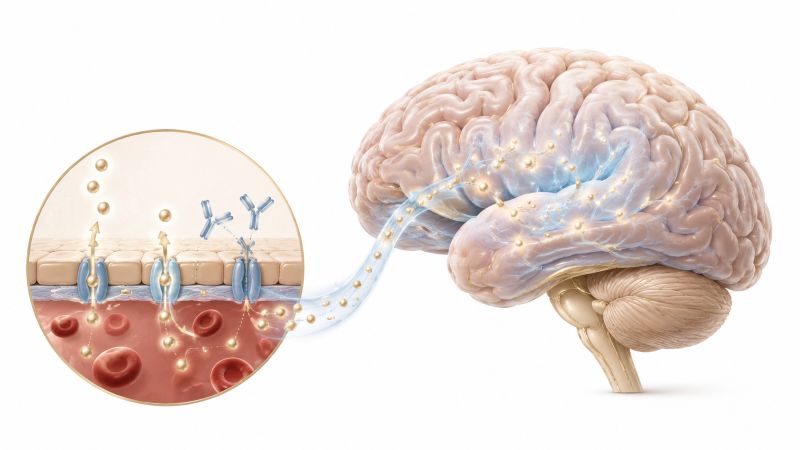
The Folate Receptor Autoantibody Test, commonly known as the FRAT test, looks for autoantibodies directed against folate receptor alpha (FRα). This receptor plays an important role in transporting folate into tissues, including across the blood–brain barrier.
In some individuals, however, autoantibodies may interfere with this process and reduce the efficiency with which folate reaches the central nervous system. Notably, this can occur even when conventional blood folate levels appear within the normal range. FRAT testing therefore investigates a different aspect of folate metabolism from a standard folate blood test.
The FRAT blood test assesses two principal types of folate receptor alpha autoantibodies. Together, the presence and levels of these antibodies give clinicians additional information about potential immune-mediated interference with folate transport.
These antibodies may interfere with folate binding to the receptor and, as a result, affect how much folate the body transports.
Rather than blocking folate directly, these antibodies attach to the receptor itself and may disrupt its normal function.
Folate, also known as vitamin B9, is an essential nutrient involved in a wide range of biological processes. In particular, folate receptor alpha carries folate into the brain. Research has shown that folate receptor autoantibodies can interfere with this transport mechanism in some individuals.
FRAT testing is a laboratory investigation, not a diagnosis. Results vary between individuals, and an appropriately qualified healthcare professional should interpret them alongside symptoms, medical history and other appropriate investigations.
Cerebral Folate Deficiency (CFD) describes a situation in which the central nervous system receives less folate than it needs. Importantly, blood folate levels do not always reflect how much folate reaches the brain.
Consequently, research has identified folate receptor alpha autoantibodies as one potential mechanism that can interfere with folate transport across the blood–brain barrier. For this reason, FRAT testing may be considered as part of a broader clinical investigation where cerebral folate deficiency is suspected.
In every case, a clinician should read a FRAT result alongside symptoms, medical history and other appropriate investigations.
A healthcare professional may consider FRAT testing in selected clinical circumstances, particularly where concerns relate to folate transport or to neurological and developmental health. Even so, the test is neither a general screening tool nor a standalone diagnosis.
Folate receptor alpha autoantibodies have attracted particular research interest in relation to Autism Spectrum Disorder (ASD). Studies have identified folate receptor autoantibodies in a proportion of children with autism, although reported prevalence varies between studies and populations. In addition, a systematic review and meta-analysis has examined the relationship between cerebral folate deficiency, folate receptor alpha autoantibodies and autism spectrum disorder.
For that reason, clinicians may consider FRAT testing in selected children or adults with ASD where they clinically suspect folate receptor autoimmunity or impaired cerebral folate transport.
| Feature | Standard Folate Blood Test | FRAT Test |
|---|---|---|
| What it measures | The amount of folate present in the blood. | Autoantibodies against folate receptor alpha that may interfere with folate transport. |
| Question it answers | Is there enough folate circulating in the blood? | Are there antibodies that may affect how folate is transported into tissues? |
| Relationship to the brain | Does not directly reflect folate availability within the central nervous system. | Investigates a mechanism that research links to folate transport across the blood–brain barrier. |
| What a normal result means | Blood folate is within the reference range. | Relevant folate receptor autoantibodies were not detected at the time of testing. |
| Can the two differ? | Yes. An individual may potentially have an apparently adequate blood folate level while still having antibodies that affect how efficiently folate is transported into certain tissues. | |
| Availability | Widely available as a routine blood test. | A highly specialised laboratory investigation with longer turnaround times. |
FRAT testing requires a blood sample. Because this is a specialist test, however, processing and reporting take longer than they do for routine blood tests. The ZEN Healthcare team can confirm the expected turnaround time when you book.
Arrange your appointment with the ZEN Healthcare team and confirm the most suitable London clinic.
Attend your appointment for blood sample collection in a private, comfortable clinical setting.
Our team then prepares your sample for specialist laboratory analysis.
Next, the laboratory analyses the sample for folate receptor autoantibodies.
Finally, you receive your FRAT report once the laboratory completes its analysis.
Where appropriate, you can then discuss your results with a healthcare professional in the context of your medical history and other investigations.
A positive result indicates that relevant folate receptor autoantibodies have been detected. However, the result does not independently diagnose cerebral folate deficiency, autism or another neurological condition.
Instead, clinical interpretation should take into account the individual’s symptoms, medical history, nutritional status and any other relevant laboratory or diagnostic investigations.
Research into folate receptor autoantibodies has also investigated folinic acid, also known as leucovorin, particularly in selected individuals with autism spectrum disorder and abnormalities affecting folate pathways. Folinic acid is different from conventional folic acid. Therefore, you should never use a FRAT result to self-prescribe folinic acid, leucovorin or high-dose folate supplements — an appropriately qualified healthcare professional should make any treatment decision after considering the test result and the individual’s overall clinical picture.

As a highly specialised laboratory investigation, FRAT testing differs considerably from a routine folate or vitamin B9 blood test. If a clinician has already advised you to undertake FRAT testing, or if you would simply like further information before booking, contact our team.
ZEN Healthcare combines specialist diagnostic testing with access to private healthcare and functional medicine services across London.
Clinics in Knightsbridge, Baker Street, Holborn and Hampstead. Please contact our team to confirm the most suitable clinic for your FRAT blood test appointment.
Access to private doctors, diagnostic laboratory testing and functional medicine services, allowing additional investigations to be considered when clinically appropriate.
Our approach focuses on providing appropriate testing and professional guidance based on the individual rather than relying on a single laboratory marker.
We handle your appointment, medical information and laboratory results with complete discretion.
Parents may encounter FRAT testing while investigating neurological, developmental, communication or learning concerns. The test requires a blood sample. Furthermore, a qualified healthcare professional may suggest it for a child when investigating folate receptor autoantibodies could add useful clinical information.
If you are considering a FRAT test for your child in London, speak to the ZEN Healthcare team about the test and the most appropriate clinical pathway.
FRAT testing does not diagnose autism, developmental delay or any other condition by itself. Moreover, testing for a child remains subject to clinical appropriateness and professional guidance.

FRAT commonly refers to the Folate Receptor Autoantibody Test. It is a specialist blood test used to detect autoantibodies directed against folate receptor alpha.
The test looks primarily for blocking and binding folate receptor alpha autoantibodies, which may interfere with normal folate receptor function and folate transport.
No. A conventional folate test measures folate in your blood. FRAT testing looks for antibodies that may interfere with folate receptor function.
Yes. Routine serum folate levels and folate receptor autoantibodies measure different things. Research has identified cases where serum folate is normal while folate transport into the central nervous system is impaired.
FRAT can identify folate receptor autoantibodies that may be associated with impaired cerebral folate transport. On its own, however, it cannot confirm a diagnosis. A clinician must interpret the result in the context of the individual’s wider clinical assessment.
No. FRAT is not an autism diagnostic test. Rather, clinicians may use it as part of broader investigations in selected individuals with autism or neurodevelopmental concerns.
Clinicians may consider FRAT testing for children where it is clinically appropriate. Please speak with the ZEN Healthcare team regarding testing for a child.
Fasting is generally not required, although you should follow any specific instructions provided before your appointment.
FRAT is a specialist laboratory test and turnaround times may differ from routine blood testing. ZEN Healthcare will advise you of the expected laboratory turnaround time when you book.
The FRAT test costs £460.
You can arrange private FRAT testing through ZEN Healthcare in London. Contact our team to confirm the most appropriate ZEN clinic for sample collection.
FRAT testing requires a blood sample. Our team then prepares and sends your sample for specialist laboratory analysis, and you receive your report once the laboratory finishes.
If you have been advised to undertake a Folate Receptor Autoantibody Test, or you would like further information about FRAT testing, our team can help. Arrange your specialist blood test with ZEN Healthcare and receive professional, confidential care at one of our London clinics.
Test fee £460 Private FRAT testing with ZEN Healthcare London.The information on this page is intended for general educational purposes and does not replace medical advice, diagnosis or treatment. FRAT testing is not a diagnostic test for Autism Spectrum Disorder and should not be interpreted in isolation. Results vary between individuals and testing is subject to clinical appropriateness. Always discuss laboratory results with an appropriately qualified healthcare professional.
 Cryotherapy