
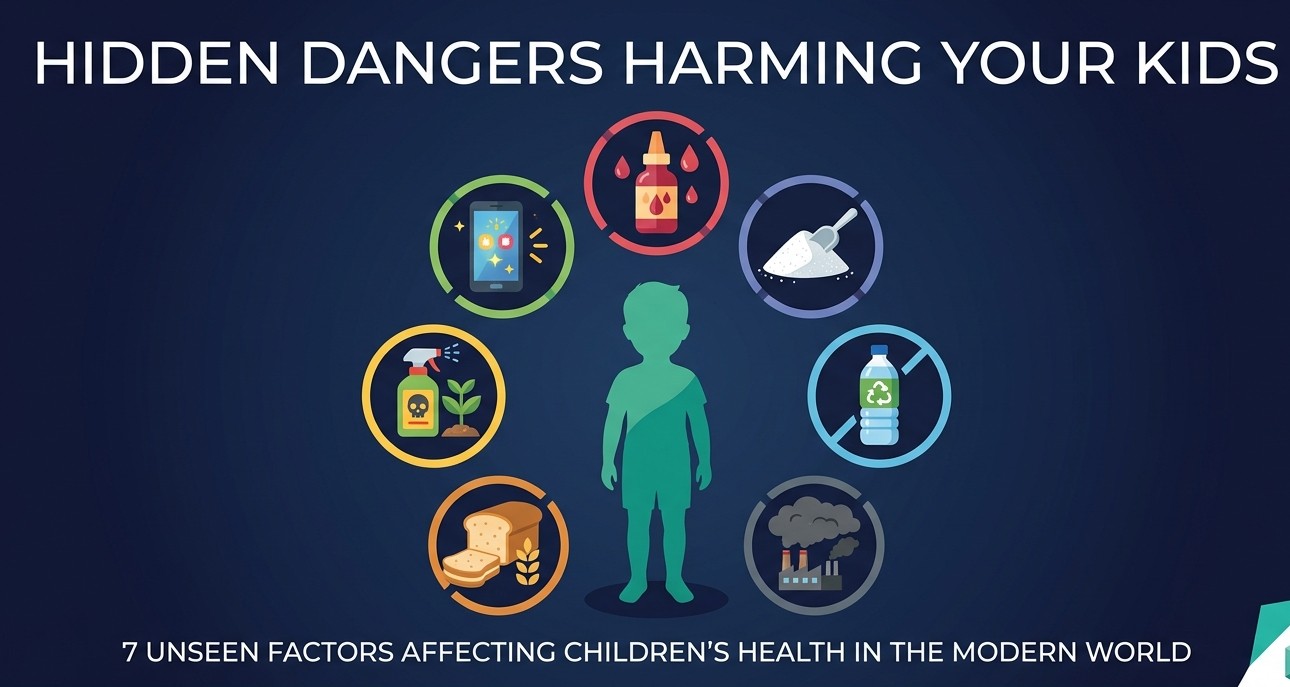
As a parent in London, you want the best for your children’s health. But did you know that many everyday items — from breakfast cereals to plastic bottles — could be silently harming your kids? Dr Yassine Bendiabdallah, lead physician at Zen Healthcare Clinic London, breaks down the 7 hidden dangers affecting children’s health today, and what you can do about them.
Why Are Children Sicker Today Than 50 Years Ago?
Children today face higher rates of ADHD, allergies, obesity, anxiety, and weakened immune systems compared to previous generations. Our genetics haven’t changed dramatically in 50 years — so what has? The answer lies in our food supply, our environment, and the sheer volume of chemicals and stimuli our children are exposed to daily.
Dr Yassine invites us to imagine a child from the 1970s placed in today’s world: more sugar, more screens, more pollution — the impact on their health would be significant. Understanding these modern threats is the first step to protecting your child.
7 Hidden Dangers Harming Your Children’s Health
1. Artificial Food Dyes
Artificial colourings such as Red 40, Yellow 5, and Blue 1 are found in a wide range of children’s foods — birthday cakes, breakfast cereals, cookies, and snack bars. Multiple studies have linked these synthetic dyes to ADHD symptoms and hyperactivity, weakened immune function and increased allergy risk, and heightened anxiety and emotional dysregulation.
What to do: When grocery shopping, check labels carefully and avoid products with artificial colours. Use a barcode scanning app to quickly identify hidden additives.
2. Hidden Sugars
Even “healthy-sounding” foods like organic low-fat yogurts and flavoured cereals can contain alarming amounts of sugar — sometimes 20 to 30 grams per serving (equivalent to 8–10 teaspoons). This hidden sugar intake is driving insulin resistance, poor metabolic health, obesity, and chronic inflammation in children.
What to do: Educate your children about sugar from an early age. Opt for whole fruits — despite their natural sugar content, the fibre helps moderate its impact on blood sugar levels.
3. Pesticides and Environmental Toxins
Non-organic produce is routinely sprayed with pesticides designed to make fruits and vegetables look larger and greener. Children’s developing systems are particularly vulnerable to these chemicals. Substances like glyphosate have been associated in research with higher rates of autism spectrum disorder and ADHD.
What to do: Choose organic and pesticide-free produce wherever possible. When you can’t, wash all fruits and vegetables thoroughly using bicarbonate of soda or white vinegar — this helps remove surface residues.
4. Microplastics and Forever Chemicals (PFOAs)
Research has now detected microplastics in human brain cells — a deeply concerning finding. Children are exposed to microplastics through plastic food containers (especially when heated), plastic water bottles left in the sun, and products containing PFOA-based coatings.
What to do: Replace plastic containers with glass or stainless steel alternatives. Never heat food in plastic. Switch to natural cleaning products and avoid single-use plastics in your home.
5. Air Pollution, Mould and Dust
London’s air quality is a real health concern, particularly in central and inner-city areas. Poor air quality — combined with indoor issues such as mould and dust — triggers inflammation that can travel from the lungs to the gut and the brain, contributing to developmental delays, attention problems, and anxiety in children.
What to do: Invest in a high-quality HEPA air purifier for your home, especially in your child’s bedroom. Address mould problems immediately — before children are exposed. Regular ventilation and cleaning of soft furnishings also helps reduce dust load.
6. Food Sensitivities and Ultra-Processed Foods
Gluten and dairy are not universally well-tolerated. While babies are born with the lactase enzyme to digest milk, many children lose this capacity as they grow older, leading to hidden intolerances. Ultra-processed foods — those with lengthy ingredient lists of additives, emulsifiers, and preservatives — can disrupt gut health and, consequently, mood and brain function.
What to do: A simple rule: if a loaf of bread has more than five or six ingredients, it’s processed beyond what it needs to be. Shop for whole, minimally processed foods and involve your children in choosing and preparing meals — this builds lifelong healthy habits.
7. Excessive Screen Time and Overstimulation
Children today are more screen-exposed than any generation in history. This constant overstimulation interferes with neurodevelopment — particularly with dopamine receptor function — leading to reduced attention spans, agitation, sleep disruption, and increased anxiety.
What to do: Be intentional about screen use. If your child is showing signs of screen dependency, reduce usage gradually rather than abruptly. Have open, age-appropriate conversations about how screens affect the brain and why limits are important.
The Bigger Picture: Overfed but Undernourished
Dr Yassine summarises the core issue clearly: today’s children are often overfed but undernourished. They consume plenty of calories — but these are largely “empty” calories, high in refined carbohydrates and sugar, and critically low in the micronutrients children need to thrive: Omega-3 fatty acids (essential for brain development), magnesium (critical for sleep, mood and muscle function), zinc (key for immune function and growth), selenium (a powerful antioxidant), and polyphenols (anti-inflammatory compounds found in colourful fruits and vegetables).
Small, consistent steps taken during childhood have an outsized impact on long-term health outcomes — including the prevention of conditions like type 2 diabetes, autoimmune disorders, and certain cancers later in life.
How Zen Healthcare London Can Help Your Family
At Zen Healthcare Clinic, our expert medical team — led by Dr Yassine Bendiabdallah — offers comprehensive health assessments, nutritional guidance, and functional medicine consultations for children and families across London. Whether you’re concerned about your child’s diet, immunity, attention, or overall wellbeing, we’re here to help.
We have clinics conveniently located across London: Knightsbridge (020 7225 1660), Baker Street (020 3609 0080), Holborn (0207 837 7143), and Hampstead (0208 079 1314).
Frequently Asked Questions
Are food dyes really harmful to children?
Yes, several peer-reviewed studies have linked artificial food dyes to behavioural changes, including hyperactivity and symptoms associated with ADHD. The EU requires warning labels on products containing certain artificial colours. Choosing foods with natural colourings or none at all is the safest option for children.
How do I reduce my child’s exposure to microplastics?
Switch to glass, ceramic, or stainless steel containers for food storage and heating. Avoid leaving plastic water bottles in direct sunlight. Use natural cleaning products and reduce single-use plastic in your household as much as possible.
What are the signs my child may have a food sensitivity?
Common signs include bloating, stomach aches, eczema, fatigue, brain fog, mood swings, or recurring ear infections. If you suspect a food sensitivity, a consultation with one of our Zen Healthcare practitioners can help identify the root cause through testing and elimination protocols.
How much screen time is safe for children?
The NHS and WHO generally recommend no screen time for children under 2, a maximum of one hour per day for ages 2–5, and consistent limits for older children with screen-free times before bed. Quality of content also matters — interactive and educational content is preferable to passive scrolling.
This article is based on a video by Dr Yassine Bendiabdallah, Physician at Zen Healthcare Clinic London. It is intended for general informational purposes only and does not constitute medical advice. Always consult a qualified healthcare professional regarding your child’s specific health needs.

 Cryotherapy